
Hosted Bitcoin mining
Colocation: your machine in a hall. Blobb and Gwensas Mining (Virunga).
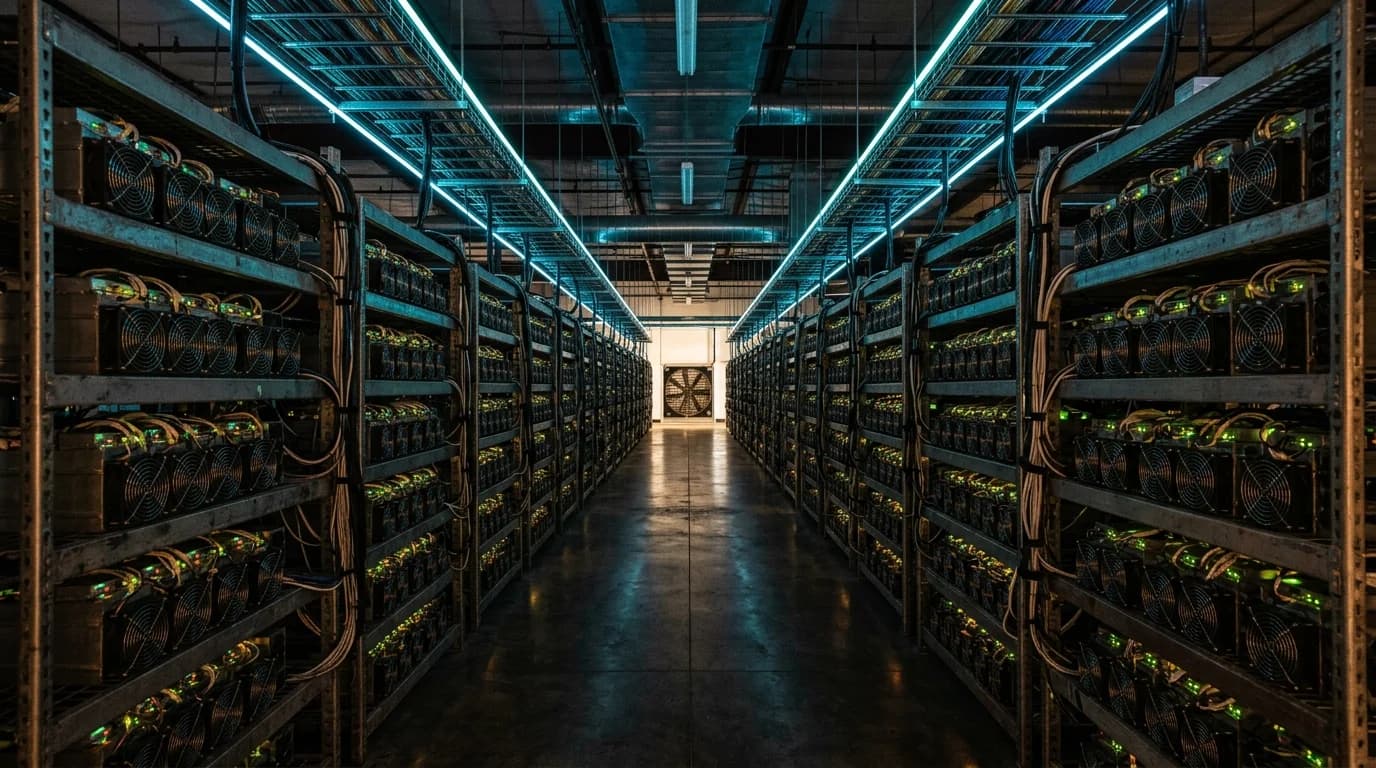
Hosted mining is simple. You buy an ASIC. A company puts it in a hall, feeds it power, keeps it cool, and watches it. You still own the box. The pool pays you. The host bills you for the room and the electricity, on whatever terms you signed.
That is colocation. Cloud mining is something else: you rent hashrate, and you never get a machine back if the seller disappears.
Why host
An air ASIC is loud all day. It dumps 3.5 kW of heat into the room. A house breaker and a house electricity tariff are built for lights and a kettle, not for a rack pulling 16 A continuously. Hydro machines need a water loop no home provides.
You host so someone is there when the unit freezes, and so the heat has somewhere to go.
What you usually pay for
Power to the PSU, a slot in a rack or a container, cooling, a network path to the pool, and a reboot when the software hangs.
Billed on top, and only if the contract says so: firmware, filter cleaning, RMA freight, repair after warranty, insurance, and shipping the box home when you leave.
Some hosts meter every kWh. Some sell a flat rack with a power cap. Some mix a setup invoice and a variable line. The number that matters is the one on the quote, not the one on a homepage.
Two hosts
Blobb (blobb.io) runs a turnkey path: the machine, the freight, the install, the hall, and a dashboard so you can see the box. Partner pages describe halls with Mining Delta, in Kazakhstan, Texas, and Iceland among the names they use. Ask which room your serial number will sit in.
Gwensas Mining (gwensas.com) is a Bordeaux operator. They take the machine through to a site and pay the wallet on a monthly rhythm. They talk about green power, and Virunga is the site associated with their name. Their homepage shows a euro-per-kWh figure: that is a commercial claim, which becomes information once it appears on a quote.
Read the contract
Ask whether the kWh is fixed or indexed. Ask how long you are locked in, whether the term renews by itself, and what an early exit costs. Ask who pays when the hall fails, and who pays when a hashboard fails. Ask about theft and fire cover. Ask how the machine comes home, and in which currency they invoice.
If the company fails, you only get the ASIC back if the paper keeps it out of the bankruptcy pile and says how you collect it. That is the one clause that matters on the day it matters.
Tax
Bitcoin received from a pool is usually income when it lands. Hosting fees and depreciation may be deductible depending on how you file. Ask someone who files in your country.
The Bitcoin Bay explains the setup. You sign with the host.
Buy or compare through The Bitcoin Bay
The Bitcoin Bay is an independent business introducer: we list new ASICs sourced directly from manufacturers (Bitmain, MicroBT, Bitdeer, Canaan) and refurbished machines via verified reseller partners. Each model is paired with professional hosting options at our partner sites in Northern Europe and Paraguay.
No yield promises, no payment handled on our side — the transaction is signed directly with the chosen partner. CIF/AMF status not solicited.
Related reading
Hosted Mining (core business)
Bitcoin Mining Colocation Costs: Pricing Breakdown
From $0.055 to $0.10/kWh, plus $100 to $350 of setup. On an S21 Pro, $1,850 to $3,250 per year. The three billing models and the negotiation levers.
ReadHosted Mining (core business)
Hosted Mining vs Home Mining: Which Wins?
Three questions settle it: your real kWh rate, your tolerance for 75 dB and 3.5 kW of heat, and your electrical installation. The twelve-month comparison.
ReadHosted Mining (core business)
Cloud Mining vs Colocation: The Real Difference
Cloud mining rents unverifiable hashpower you never own. Colocation means you own the ASIC and an operator hosts it. The risk profiles are not comparable.
Read
Frequently asked questions
How much does it cost?+
Whatever is on the Blobb or Gwensas quote. This page does not publish a market rate.
Who hosts?+
Blobb and Gwensas Mining (Virunga). Ask them which hall and which power.
Is hosting mandatory?+
No. Home works if you can live with the noise, the heat, and a house breaker. Hydro still wants an industrial loop.
Minimum term?+
The one in the contract. Check lock-in, renewal, and exit.
If the host fails?+
You get the ASIC back only if the paper keeps it out of the estate and says how you collect it.
- [1]Hashrate Index — hosting market rates & operator coverage
Accessed on 17 mai 2026
- [2]Compass Mining — US hosted mining operator
Accessed on 17 mai 2026
- [3]Luxor — mining pool & hosting industry analyst
Accessed on 17 mai 2026
- [4]Cambridge Bitcoin Electricity Consumption Index (CBECI)
Accessed on 24 mai 2026
- [5]Mempool.space — Bitcoin block explorer & network stats
Accessed on 24 mai 2026

slashbin
Builder depuis 2011. J'ai déployé et suivi en direct plusieurs vagues d'ASIC en hosting professionnel sur des sites en Europe du Nord, traversé les halvings au fil des années. Sur The Bitcoin Bay, je pose les chiffres réels, je casse les hypothèses dangereuses, et je mets en relation des projets sérieux avec des hébergeurs vérifiés. Pas de promesse de rendement.
- · Mineur depuis 2011
- · Suivi de déploiements ASIC en hosting professionnel
- · Veille marché ASIC + hashprice hebdomadaire